The Greatest Love Story
Topics & people (9)
Summary
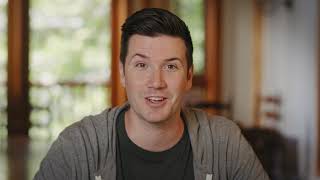
Fr. Mike Schmitz speaks at the National Eucharistic Congress, retracing the “greatest love story” through all of Scripture. Walking alongside Cleopas and his wife on the road to Emmaus, Jesus unpacked how every thread of salvation history — Abraham’s sacrifice on Mount Moriah, the Passover lamb, John the Baptist’s declaration — pointed to one climactic moment: the offering of his body, blood, soul, and divinity on the cross. Fr. Mike then connects that sacrifice directly to every Mass, showing that the Eucharist is not merely the presence of Jesus but the re-presentation of Calvary, where the Father is glorified and the world is sanctified. He closes with a piercing challenge: knowledge alone is not enough — we must move from indifference to love through genuine repentance.
Key Points
The Unbridgeable Gap
- God is good, made the world good, and made humanity good — but sin broke the relationship between God and humanity
- Sin is not merely a mistake or breaking a rule; it is saying “God, I know what you want — I don’t care, I want what I want”
- Every philosophy, religion, and social reform is an attempt to fix this brokenness, but the gap between God and humanity is unbridgeable from our side
- Only Jesus Christ, who is both God and man, could bridge that gap
The Lamb Through Scripture
- Abraham and Isaac: God asked Abraham to sacrifice his only beloved son on Mount Moriah. Abraham told Isaac “God will provide himself a sacrifice.” God provided a ram — but had promised a lamb
- The Passover: The Israelites were saved by sacrificing a lamb, eating its flesh, and marking their homes with its blood — salvation required both the blood and the flesh of the lamb
- John the Baptist: When John declared “Behold the Lamb of God,” he was not calling Jesus gentle and fluffy — he was identifying him as the lamb of sacrifice
- Palm Sunday: Jesus entered Jerusalem on the same day the sacrificial lambs were brought into the city — surrounded by lambs because he is the Lamb of God
Calvary as Sacrifice, Not Execution
- Jesus carried the wood of the sacrifice on his back, just as Isaac carried the wood up Mount Moriah
- Jesus was crowned with thorns, echoing the ram caught by its horns in the thicket
- He was crucified on Mount Moriah at the same hour the sacrificial lambs were slaughtered in the temple
- His seamless robe was an ephod — a high priestly garment — revealing that Jesus is both the lamb being sacrificed and the high priest offering the sacrifice
- What the world saw as an execution was in fact the sacrifice of the Lamb of God by the high priest Jesus Christ himself
The Mass Is Calvary
- The Incarnation did not save us; the miracles did not save us; only the passion, death, and resurrection of Jesus bridged the gap
- The real presence of Jesus in the Eucharist is not the point of the Mass — it is what makes the point possible, just as the Incarnation made the sacrifice possible
- When the priest elevates the body and blood of Christ and prays “Through him, with him, in him... all glory and honor is yours, Almighty Father” — that is the moment of Calvary, where Jesus offers himself to the Father
- Every Mass glorifies the Father and sanctifies the world — and we participate in the redemption of humanity
From Knowledge to Love Through Repentance
- Jesus told the church in Ephesus: “I know your works, your endurance, your faithfulness — yet I hold this against you: you have lost your first love” (Revelation 2)
- The remedy for ignorance is truth leading to knowledge, but the remedy for indifference is repentance leading to love
- Jeremiah warned the Israelites not to trust in the words “This is the Temple of the Lord” while their hearts were far from God — Catholics face the same temptation with the real presence
- The story of Hophni and Phinehas shows that God’s presence is not a tool or a toy — they brought the Ark into battle without repentant hearts and were defeated
- “Knowledge can make someone great, but only love can make a saint”
Identify Your Fire Extinguishers
- If you have lost the fire of your love for God, ask: what are the fire extinguishers in my life?
- Sometimes they are big sins, but more often they are small things — slowly smothering the flame
- You cannot fit the fire of God’s love into the life you left behind — something has to change, some remodeling has to happen
- Brokenness, littleness, not knowing enough — none of these disqualify you. The real danger is not caring
Notable Quotes
“A sin isn’t ‘I made a mistake.’ A sin isn’t ‘I broke a rule.’ A sin is: God, I know what you want — I don’t care. I want what I want.”
“What the world saw as an execution was not an execution. This was a sacrifice of the Lamb of God by the high priest Jesus Christ himself — that takes away the sins of the world.”
“The real presence of Jesus is not the point of the Mass. The presence of Jesus is what makes the point possible.”
“When you see the Lord lifted up like this, you are looking at Calvary. You are participating in his restoration of the world.”
“If this is going to be a revival — a real revival — in the history of Christianity you can never have a revival without repentance.”
“Knowledge can make someone great, but only love can make a saint.”
“I cannot fit the fire of God’s love into the life I left behind. I can’t return and expect that flame to keep growing. I have to identify those fire extinguishers. I have to repent — because I need love.”
Let Fr. Mike Schmitz lead you through the greatest love story — from Abraham and Isaac, to the Passover, to Jesus the Lamb of God — and invite you to move from merely knowing this story to loving the One at its center, through honest repentance.
Reflection Questions
- 1
Fr. Mike traces 'the Lamb of God' from Abraham all the way to the cross. What part of that connection stood out to you most?
- 2
He says knowledge can make you great, but only love makes a saint. Where has your faith become more head-knowledge than love lately?
- 3
What is one 'fire extinguisher' quietly cooling your love for God that you could remove this week?
Meditation Guide
Use this however suits you — quietly on your own, or as an outline for a session. When you come to reflect, turn to the reflection questions above.
- 1
Begin by asking yourself how you would explain why the Mass matters to someone who has never been — and let that frame what you are about to hear.
- 2
Watch the video, attentive to its central thread; you may want to pause after the Old Testament overview (around 15:00) and again after the explanation of the Mass (around 22:00) to let the key points land.
- 3
Trace the lamb through Scripture — Abraham and Isaac on Mount Moriah, the Passover lamb, John the Baptist's cry 'Behold the Lamb of God,' Palm Sunday — converging on Calvary and on the elevation at every Mass.
- 4
Sit with Fr. Mike's distinction between the remedy for ignorance (truth leading to knowledge) and the remedy for indifference (repentance leading to love), recalling that 'knowledge can make someone great, but only love can make a saint.'
- 5
Spend time with the reflection questions above, lingering on whichever one speaks to you, and honestly name one 'fire extinguisher' quietly smothering your love for God.
- 6
Close in a prayer of repentance and renewal, asking the Lord to restore your first love, and choose one concrete step to take this week.