St. Boniface
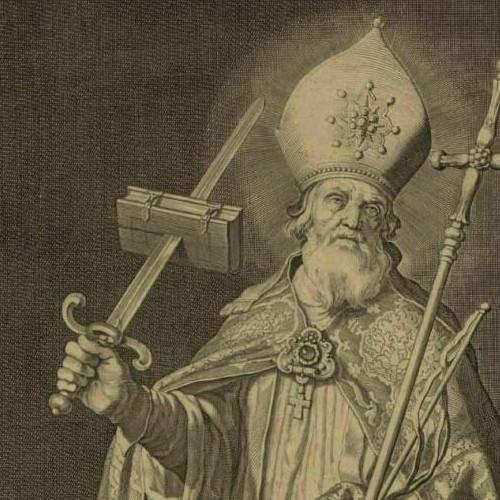
An English monk who walked away from a quiet life of books to spend forty years preaching in the German forests — felling a god's oak with an axe, building a church across half a continent, and dying with a book raised over his head.
Timeline of St. Boniface
- c. 675
Born in Wessex
Born to a respected Anglo-Saxon family in the kingdom of Wessex — later tradition names Crediton in Devon — and baptized Wynfrith.
- c. 690s
Schooled at Exeter and Nursling
Against his father's wishes he entered monastic life, studying first at Exeter and then at the abbey of Nursling, where he became master of the school and wrote the first Latin grammar by an Englishman.
- 716
First mission to Frisia fails
He sailed to Frisia to preach, but a war between Charles Martel and the pagan king Radbod had laid the churches waste, and he returned to England empty-handed.
- 719
Commissioned by Pope Gregory II
He went to Rome, where the pope renamed him Boniface and sent him to preach the Gospel east of the Rhine, in the heart of pagan Germania.
- 722
Consecrated bishop in Rome
Pope Gregory II made him a missionary bishop without a see and secured for him the protection of Charles Martel, ruler of the Franks.
- c. 723
Fells the Oak of Thor
At Geismar in Hesse he chopped down the great oak sacred to the thunder-god before a watching crowd, and built a chapel from its wood.
- 732
Made archbishop by Gregory III
He received the pallium and was given power to found new dioceses across Germany, organizing the church he had planted.
- 744
Founds the abbey of Fulda
Through his disciple Sturm he established a great monastery in the forest of Hesse, which became the heart of the German church and his chosen burial place.
- 754
Martyred at Dokkum
Returning to the Frisian mission of his youth, he and his companions were cut down by an armed band on the banks of the Borne on the eve of Pentecost.