How to Read Apocalyptic Literature
Topics & people (6)
Summary
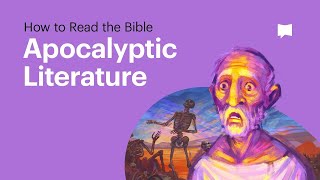
Though most people assume “apocalypse” means the end of the world, the biblical word is Greek for “to uncover or reveal” — a moment when God pulls back the curtain to show what is really going on from a divine perspective. The Bible includes both stories of people having an apocalypse and whole sections of apocalyptic literature filled with poetic, symbolic imagery. Reading it wisely means tracing biblical design patterns that begin in Genesis. Even the book of Revelation, which feels like the end of the world, is ultimately about the beginning of the renewed world where Heaven and Earth are reunited.
Key Points
What “Apocalypse” Really Means
- Most people think the word means the end of the world, but “apocalypse” is a Greek word meaning “to uncover or reveal.”
- An apocalypse is when you suddenly see the true nature of something you couldn’t see before, because we all develop familiar ways of seeing that limit or blur our vision.
- In the Bible, an apocalypse is when God pulls back the curtain to show someone what’s really going on in the world from a divine perspective.
People Who Had an Apocalypse
- Isaiah the prophet is suddenly transported in a vision into God’s throne room in the temple — described as a bridge between Heaven and Earth — where God gives him a divine perspective on Israel’s past, present, and future, so he can bring challenge and comfort to God’s people.
- The apostle Paul, while trying to stop the movement of Jesus, is stopped by a vision of the risen Jesus and realizes he’s fighting the very thing he had been hoping for, changing the course of his life.
- These apocalypses give people a heavenly perspective on their earthly situation — they can give hope, challenge, or make you change everything.
Apocalyptic Literature and Its Symbols
- Some biblical books contain extended apocalyptic dreams and visions filled with strange images — like Daniel’s ferocious beasts coming up out of a dark sea and the “Son of Man” exalted to rule the world.
- Apocalyptic literature is written in a poetic, imaginative style packed with symbolism.
- To understand the symbols, study the rest of your Bible: apocalyptic imagery is based on biblical design patterns beginning in Genesis. The chaotic sea, which God tames but doesn’t eliminate, becomes an image of danger, death, and cosmic chaos; the dry land is the safe, ordered place where humans rule as God’s image; the beasts that humans were to oversee end up deceiving them, and humans start acting like violent beasts.
- Sometimes a prophet tells you what a symbol means — in Daniel, the beasts symbolize violent human kingdoms — but more often authors assume you can trace an image through the biblical story.
The Book of Revelation
- Revelation is one long vision, an apocalypse, working the same way. It begins with John transported to God’s throne room, where he sees the risen Jesus as the exalted King of the world — depicted as a bloody lamb, a design pattern showing Jesus as the sacrificial lamb of Passover and the Day of Atonement who gave his life for the sins of the world.
- John sees the ultimate beastly dragon — the spiritual power energizing violent earthly empires — cast out by Jesus, the world’s true King.
- The three seven-part cycles of God’s judgment connect the stories of the flood, the ten plagues on Egypt, the exile to Babylon, and more — moments when humans unleash so much violence and death that God hands them over to self-destruction, a reversal of creation as the world sinks back to darkness and disorder.
- Just as God overcame darkness and chaos with light and life in Genesis 1, so in Revelation the death of Jesus and the death of the world as we know it is the pathway into the renewed creation that began with Jesus’ resurrection.
The Purpose of Apocalyptic
- Though Revelation feels like the end of the world, it is actually about the beginning of the renewed world where Heaven and Earth are reunited and God’s human images rule all creation in the love and power of God.
- Much remains hard to understand, but the purpose is clear: to give a heavenly perspective on our earthly circumstances so every generation of God’s people can be challenged, comforted, and given hope for the future.
- This video concludes the “How to Read the Bible” series, which covered the styles of writing — narrative, poetry, discourse — and showed how every part fits into the unified story that leads to Jesus.
Notable Quotes
“An apocalypse is when God pulls back the curtain to show someone what’s really going on in the world from a divine perspective.”
“These apocalypses give people a heavenly perspective on their earthly situation, and they can give hope or they can challenge you.”
“While the Revelation feels like the end of the world, it’s actually about the beginning of the renewed world where Heaven and Earth are reunited.”
An invitation to let God pull back the curtain, sitting with the true meaning of 'apocalypse' as a holy unveiling and letting its imagery give you a heavenly perspective on your own life.
Reflection Questions
- 1
'Apocalypse' really means pulling back the curtain to see the truth, not the end of the world. How is that different from what movies show?
- 2
In Revelation, Jesus wins by giving his life, not by force. How is that different from how we usually picture winning?
- 3
What is one worry you could face this week in the hope that God makes everything new?
Meditation Guide
Use this however suits you — quietly on your own, or as an outline for a session. When you come to reflect, turn to the reflection questions above.
- 1
Begin by calling to mind what images come to you when you hear the word 'apocalypse,' and how much of that is the popular idea of the end of the world.
- 2
Watch the video, attentive to its central claim: that 'apocalypse' is a Greek word for an unveiling, a moment God pulls back the curtain to reveal his perspective.
- 3
Sit with the examples of people given an apocalypse, Isaiah caught up into God's throne room and Paul stopped by a vision of the risen Jesus, and the books of apocalyptic literature, Daniel and Revelation.
- 4
Explore how to read the symbols by tracing biblical design patterns from Genesis onward, the chaotic sea, the beasts, and Jesus appearing in Revelation as the slain yet victorious lamb whose power is poured out in self-giving love.
- 5
Spend time with the reflection questions above, lingering on whichever one speaks to you about the challenge, comfort, or hope you most need to see clearly.
- 6
Close in prayer, choosing one way to live this week in the hope of the renewed creation rather than in fear, and entrusting it to God.
Up Next in Playlist
How to Read the Bible

How to Read the Bible: An Overview

What Is the Bible?

The Story of the Bible

Writing Styles of the Bible
How the Bible Is Unique as Literature

Plot in Biblical Narrative
Character in Biblical Narrative

Setting in Biblical Narrative

Design Patterns in Biblical Narrative
The Art of Biblical Poetry

Metaphor in Biblical Poetry

The Book of Psalms

How to Read the Prophetic Books

Biblical Law
The Books of Solomon

The Gospel
Why Jesus Told Parables

New Testament Letters: Historical Context
New Testament Letters: Literary Context
How to Read Apocalyptic Literature