Character in Biblical Narrative
Topics & people (6)
Summary
Most of us picture biblical characters as simple saints or sinners, the way Bible stories are told to children. This video shows that biblical authors actually present characters as complex and morally compromised, communicating a great deal through very little detail. Names, physical appearance, words, and actions all carry symbolic weight, while authors usually withhold thoughts, motives, and moral judgment so readers must weigh a character’s behavior by its consequences. The deeper point is that God keeps working with deeply flawed people, and the moments worth imitating are when characters come to the end of themselves and choose radical trust in God.
Key Points
Characters as a mirror
- Every good story has characters who encounter conflict and must overcome it; we identify with them because we are living our own stories with our own conflicts.
- Through characters an author shows their view of what it means to be human. Biblical stories use characters as a mirror so we can see our own human nature in the reflection.
Communicating through minimal detail
- Biblical authors develop characters differently from modern narratives, conveying much through little detail; characters can be hard to relate to because so little is told about them.
- Physical appearance is symbolic: Saul is tall (matching his love of status and power), David is a runt (humbly accepting low status and letting God exalt him); Esau’s hairiness fits his animal-like behavior, Jacob’s smooth skin matches his slippery, deceptive nature.
- Names symbolize roles: Abraham sounds like “father of a multitude,” Jacob means “deceiver,” Ruth means “refreshment,” and Saul means “the one asked for” — the flawed king the people requested.
Withholding motive and moral commentary
- Authors rarely tell us a character’s thoughts or motives. When Moses kills the Egyptian beating an Israelite, we aren’t told whether it was righteous anger or losing his cool, or whether God approved.
- Biblical narrators usually avoid moral commentary, letting words and actions reveal motive and leaving readers to judge by the consequences.
- Moses’ murder begins a pattern of his anger getting the best of him, forcing him to flee into the desert for forty years — though he also meets his wife there, leaving the reader to ponder.
Complex, compromised characters
- The Bible is not a children’s book; its characters are a mixed bag of good and evil, just like us, with hardly any flawless figures.
- Even “heroes” are compromised: Abraham used an Egyptian slave for sex and lied about his wife twice to save himself; David, the man after God’s own heart, slept with another man’s wife and had him murdered.
- Because someone is called by God, wins a battle, or becomes successful does not mean the author wants us to imitate them — it would actually be dangerous to imitate most biblical characters.
What we can imitate
- Most stories highlight the moments when characters fail or come to the end of themselves and then choose radical trust in God’s grace and wisdom.
- In those moments the authors show us how to be a human who truly pleases God — through humility and surrender.
- God’s continued commitment to flawed characters is a profound statement about His patience and love; God Himself is also a character in the story. Studying these characters lets us see our own worst tendencies and God’s gracious response that carries the story to its end.
Notable Quotes
“Biblical stories use characters as a mirror so we can see ourselves and discover our own human nature in the reflection.”
“The Bible is not a children’s book. Its characters are very complex, a mixed bag of good and evil, just like us.”
“Pay attention and you will notice that most biblical stories highlight the moments when characters fail or come to the end of themselves. Then they choose radical trust in God’s grace and wisdom.”
Let the flawed, complicated people of Scripture become a mirror for your own heart, so that in their failures and their moments of radical trust you discover both your own tendencies and the patient love of God.
Reflection Questions
- 1
Why do you think God left the flaws of 'heroes' like David right there in the Bible instead of cleaning them up?
- 2
These characters are like a mirror. What do you see of yourself in them?
- 3
Where in your life this week could you trust God instead of trying to control everything?
Meditation Guide
Use this however suits you — quietly on your own, or as an outline for a session. When you come to reflect, turn to the reflection questions above.
- 1
Before you begin, name a 'hero' of the Bible and the single word you would use to describe them, then hold that word loosely — the video may complicate it.
- 2
Watch the video, attentive to its central idea: that biblical authors present characters as complex and morally compromised, holding them up as a mirror so you can recognize your own human nature in the reflection.
- 3
Open the Scriptures and read the account of Moses killing the Egyptian in Exodus 2, noticing how the narrator withholds his motive and any moral verdict, leaving you to weigh his behavior by its consequences.
- 4
Explore how the authors communicate through small symbolic details — Saul's height beside David's lowliness, Esau's hairiness beside Jacob's smooth, slippery nature — and how even 'heroes' like Abraham and David are a mixed bag of good and evil, until the moment they come to the end of themselves and choose radical trust in God.
- 5
Spend time with the reflection questions above, lingering on whichever one holds the clearest mirror up to your own heart.
- 6
Close in prayer, speaking plainly to God and trusting the same patient love that never abandoned those flawed people, then naming one concrete act of humility or surrender to offer him.
Up Next in Playlist
How to Read the Bible

How to Read the Bible: An Overview

What Is the Bible?

The Story of the Bible

Writing Styles of the Bible
How the Bible Is Unique as Literature

Plot in Biblical Narrative
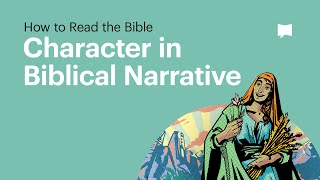
Character in Biblical Narrative

Setting in Biblical Narrative

Design Patterns in Biblical Narrative
The Art of Biblical Poetry

Metaphor in Biblical Poetry

The Book of Psalms

How to Read the Prophetic Books

Biblical Law
The Books of Solomon

The Gospel
Why Jesus Told Parables

New Testament Letters: Historical Context
New Testament Letters: Literary Context
How to Read Apocalyptic Literature